

An Efficient DMO Task Scheduling Technique for Wearable Biomedical Devices
The popularity of wearable devices has grown as they improve the quality of life in many applications. In particular, for medical devices, energy harvesters are the dominating source of energy for wearable devices. However, their power budget is limited. Thus, power-saving techniques are essential components in the whole technology stack of those devices. That is, choosing the optimal schedule for different tasks running on the wearable device can help to reduce energy consumption. This paper presents a sensor task scheduling technique for optimizing energy consumption for energy harvesting
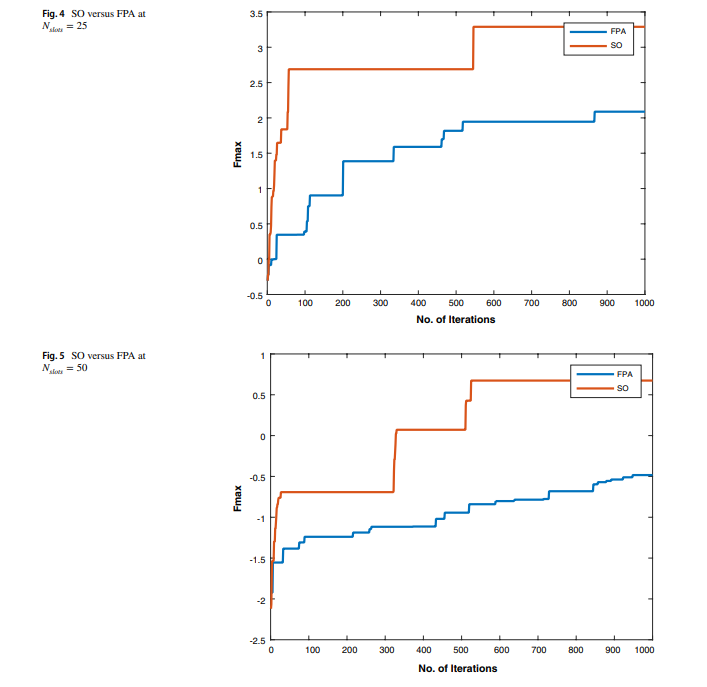
A power-aware task scheduler for energy harvesting-based wearable biomedical systems using snake optimizer
There is an increasing interest in energy harvesting for wearable biomedical devices. This requires power conservation and management to ensure long-term and steady operation. Hence, task scheduling algorithms will be used throughout this work to provide a reliable solution to minimize energy consumption while considering the system operation constraints. This study proposes a novel power-aware task scheduler to manage system operations. For example, we used the scheduler to handle system operations, including heart rate and temperature sensors. Two optimization techniques have been used to

In the Identification of Arabic Dialects: A Loss Function Ensemble Learning Based-Approach
The automation of a system to accurately identify Arabic dialects many natural language processing tasks, including sentiment analysis, medical chatbots, Arabic speech recognition, machine translation, etc., will greatly benefit because it’s useful to understand the text’s dialect before performing different tasks to it. Different Arabic-speaking nations have adopted various dialects and writing systems. Most of the Arab countries understand modern standard Arabic (MSA), which is the native language of all other Arabic dialects. In this paper we propose a method for identifying Arabic dialects

Light-Weight Intelligent Egyptian Food Detector For Diabetes Management
Diabetic patients need a management tool that combines multiple features and tracks and views detailed data time-efficiently. Effective food logging is an important element of health monitoring. In this paper, we propose 'Suger.ly', a lightweight mobile application with artificial intelligence food recognition for diabetes management. The system has been trained to recognize 101 distinct types of food, with a focus on Egyptian cuisine. The app can then get nutritional value and insulin calculations. The results obtained from the Single-Shot multibox Detection (SSD) MobileNet-V1 food detection

Light-Weight Food Image Classification For Egyptian Cuisine
Food is an integral aspect of daily life in all cultures. It highly affects people's diets, eating behaviors, and overall health. People with poor eating habits are usually overweight or obese, which leads to chronic diseases such as diabetes and cardiovascular disease. Today, the classification of food images has several uses in managing medical conditions and dieting. Deep convolutional neural network (DCNN) architectures provide the foundation for the most recent food recognition models. However, DCNNs are computationally expensive due to high computation time and memory requirements. In
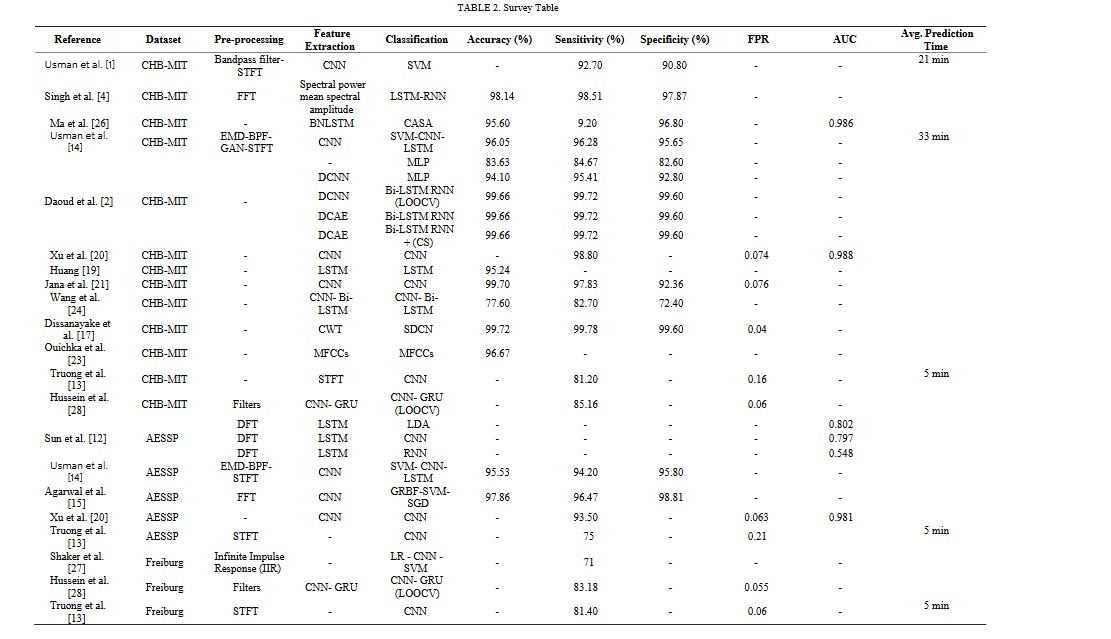
Deep Learning Approaches for Epileptic Seizure Prediction: A Review
Epilepsy is a chronic nervous disorder, which disturbs the normal daily routine of an epileptic patient due to sudden seizure onset that may cause loss of consciousness. Seizures are periods of aberrant brain activity patterns. Early prediction of an epileptic seizure is critical for those who suffer from it as it will give them time to prepare for an incoming seizure and alert anyone in their close circle of contacts to aid them. This has been an active field of study, powered by the decreasing cost of non-invasive electroencephalogram (EEG) collecting equipment and the rapid evolution of
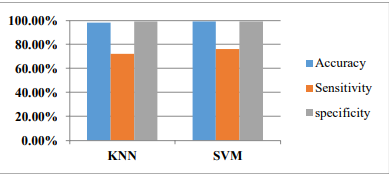
Comparative Analysis of Various Machine Learning Techniques for Epileptic Seizures Detection and Prediction Using EEG Data
Epileptic seizures occur as a result of functional brain dysfunction and can affect the health of the patient. Prediction of epileptic seizures before the onset is beneficial for the prevention of seizures through medication. Electroencephalograms (EEG) signals are used to predict epileptic seizures using machine learning techniques and feature extractions. Nevertheless, the pre-processing of EEG signals for noise removal and extraction of features are two significant problems that have an adverse effect on both anticipation time and true positive prediction performance. Considering this, the
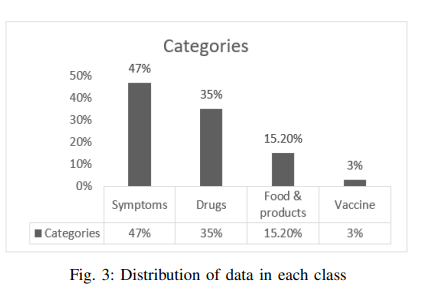
Intelligent Arabic-Based Healthcare Assistant
Text classification has been one of the most common natural language processing (NLP) objectives in recent years. Compared to other languages, this mission with Arabic is relatively restricted and in its early stages, and this combination in the medical application area is rare. This paper builds an Arabic health care assistant, specifically a pediatrician that supports Arabic dialects, especially Egyptian accents. The proposed application is a chatbot based on Artificial Intelligence (AI) models after experimenting with Two Bidirectional Encoder Representations from Transformers (BERT) models
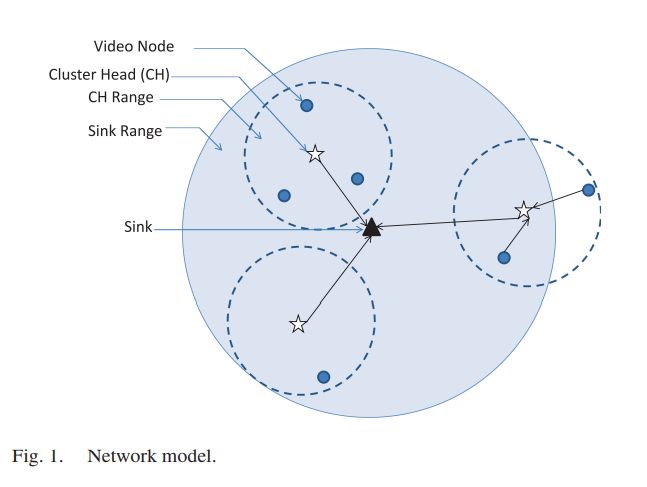
Optimal resource allocation for green and clustered video sensor networks
Wireless video sensor networks (WVSNs) are opening the door for many applications, such as industrial surveillance, environmental tracking, border security, and infrastructure health monitoring. In WVSN, energy conservation is very essential because: 1) sensors are usually battery-operated and 2) each sensor node needs to compress the video prior to transmission, which consumes more power than conventional wireless sensor networks. In this paper, we study the problem of minimizing the total power consumption in a cluster-based WVSN, leveraging cross-layer design to optimize the encoding power
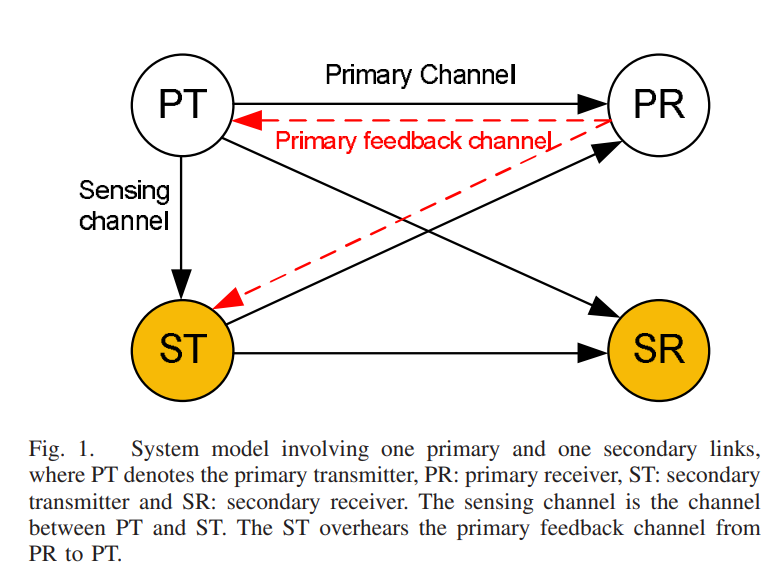
Leveraging primary feedback and spectrum sensing for cognitive access
We consider a time-slotted primary system where both the primary channel and primary activity are modeled as two independent two-state Markov chains. The primary transmitter can be idle or busy, whereas the channel can be in erasure or not. Moreover, the sensing channel between the primary transmitter and secondary transmitter is modeled as a two-state Markov chain to represent two levels of sensing reliability. At the beginning of each time slot, the secondary transmitter may remain idle, transmit directly, or probe the channel and access the channel only if it is sensed to be free. At the