
Apache Spark Powered: Enhancing Network Intrusion Detection System Using Random Forest
The increasing sophistication of cyber attacks necessitates effective intrusion detection systems. We propose a novel intrusion detection method integrating deep learning with big data management using Apache Spark. Leveraging the comprehensive CSE-CIC-IDS2018 dataset, we apply extensive data preprocessing, including handling missing and unreliable values, duplicates, and redundant columns. In addition, implementation of a Random Forest based feature importance approach is derived to prioritize the most impactful Features. Furthermore, stratified k-fold cross-validation is used for a model

Energy Optimization and Cost Reduction in Water Distribution Networks
Since the majority of energy consumed by water supply systems is used in transporting and distributing water, in addition to the energy required to pump the water from its sources, energy consumption is significantly associated with the water demand. Several studies have been carried out to optimize pump operations to achieve appropriate pressure and reduce the energy associated with controlling water levels in storage facilities. In this paper, we develop an optimization and decision support technique for a Water Distribution Network (WDN) that considers energy efficiency by limiting the

Sustainable Energy-Aware Task Scheduling for Wearable Medical Device Using Flower Pollination Algorithm
Power management and energy conservation are crucial for medical wearable devices that rely on energy harvesting. These devices operate under strict power budgets and require prolonged and stable operation. To achieve this, Energy-aware task scheduling is proposed as a solution to minimize energy consumption while ensuring the continued operational capabilities of the device. our paper presents a task scheduling method using the Flower Pollination Algorithm (FPA). The proposed task scheduling focuses on managing the activity of key components such as the heart rate sensor, temperature sensor

Threshold Energy Based LEACH-K Effect on the Accessibility of Wireless Sensor Networks
This paper aims to deliver an exhaustive investigation on the threshold energy parameter's direct impact on the Cluster Head (CH) selection phase in Low-Energy Adaptive Clustering Hierarchy Based on K-Means (LEACH-K) protocols. The most prominent threshold energy selection criterion out of the scarcely available research on the LEACH-K threshold energy parameter is used to simulate the LEACH-K protocol. Simulations are carried out on scaled-up Wireless Sensor Networks (WSNs) in terms of size and number of nodes. An analysis is performed on the life-cycle of the CH selection process, which
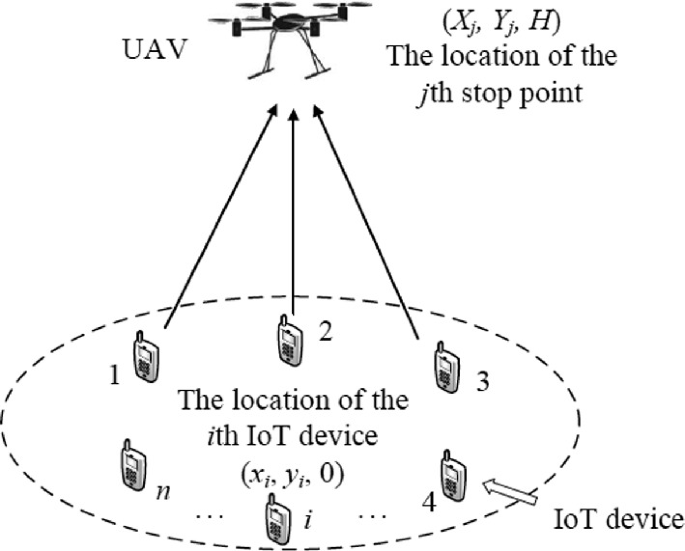
UAV-Assisted IoT Data Collection Optimization Using Gaining-Sharing Knowledge Algorithm
Unmanned aerial vehicles (UAVs) provide an energy-efficient and robust solution for data collection from the internet of things (IoT) devices. However, the UAV’s deployment optimization, including locations of the UAV’s stop points, is necessary to save the overall energy consumption and conduct the data collection efficiently. Thus, the objective is to minimize the energy consumption of the UAV and the IoT devices while collecting the data efficiently. This chapter proposes gaining-sharing knowledge (GSK) algorithm for optimizing the UAV’s deployment. In GSK, the number of UAV’s stop points

An Efficient DMO Task Scheduling Technique for Wearable Biomedical Devices
The popularity of wearable devices has grown as they improve the quality of life in many applications. In particular, for medical devices, energy harvesters are the dominating source of energy for wearable devices. However, their power budget is limited. Thus, power-saving techniques are essential components in the whole technology stack of those devices. That is, choosing the optimal schedule for different tasks running on the wearable device can help to reduce energy consumption. This paper presents a sensor task scheduling technique for optimizing energy consumption for energy harvesting
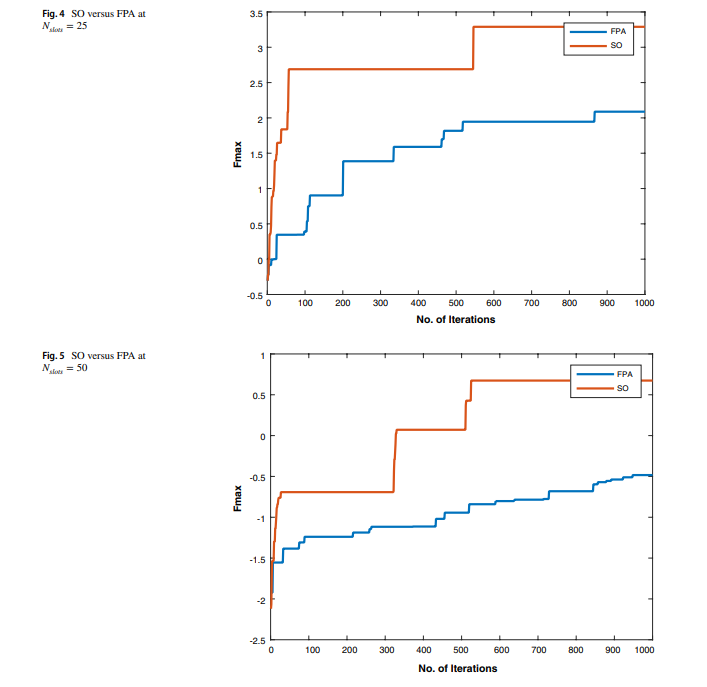
A power-aware task scheduler for energy harvesting-based wearable biomedical systems using snake optimizer
There is an increasing interest in energy harvesting for wearable biomedical devices. This requires power conservation and management to ensure long-term and steady operation. Hence, task scheduling algorithms will be used throughout this work to provide a reliable solution to minimize energy consumption while considering the system operation constraints. This study proposes a novel power-aware task scheduler to manage system operations. For example, we used the scheduler to handle system operations, including heart rate and temperature sensors. Two optimization techniques have been used to

Implementation of Multi-Step Bias-Flip Rectifier for Piezoelectric Energy Harvesting
The full-wave rectifier is an essential step for extracting energy from a piezoelectric source. Yet, the inherent capacitance of the piezoelement significantly is considered a limitation of the efficiency of extraction. To address this issue, the bias-flip rectifier can be used. However, this rectifier needs large inductor and precise tuning. The large inductor increases the overall volume of the system which is inefficient. This paper address the problems with the traditional bias-flip rectifier by introducing an enhanced multi-step bias-flip rectifier to achieve a high voltage-flip

Integrated Trust-Clustering and Dijkstra Routing Algorithms for Energy-Efficient WSNs
Wireless Sensor Networks (WSNs) playa crucial role in various fields but are highly susceptible to external attacks, making the development of secure data aggregation methods in WSNs imperative. To enhance the security of WSNs, this study introduces a Trust-Based Clustering and Dijkstra-Based Routing algorithm (TBC-DBR). The proposed algorithm aims to establish a secure and efficient data aggregation mechanism in WSNs. It begins by dividing the sensor nodes into clusters, creating a structured network architecture. Within each cluster, the members undergo a three-phase trust evaluation process

Enhancement of Organic Solar Cell Absorption by ZnO and LiF Insertion within the Active Layer
Optical performance enhancement of organic solar cells is crucial to achieve high power conversion efficiency. The active layer is the only layer that is of interest. A modified active layer of P3HT:PCBM with nanoparticles of ZnO and LiF are embedded in the active layer. The optical outcomes showed an increase in the absorption by 4.67% compared to the case without ZnO and LiF. Spacing between ZnO and LiF along with their dimensions are important to absorption enhancement. Compact spacing between ZnO and LiF inhibits light absorption due to large reflection. A maximum increase in current by 17