
Towards Intelligent Web Context-Based Content On-Demand Extraction Using Deep Learning
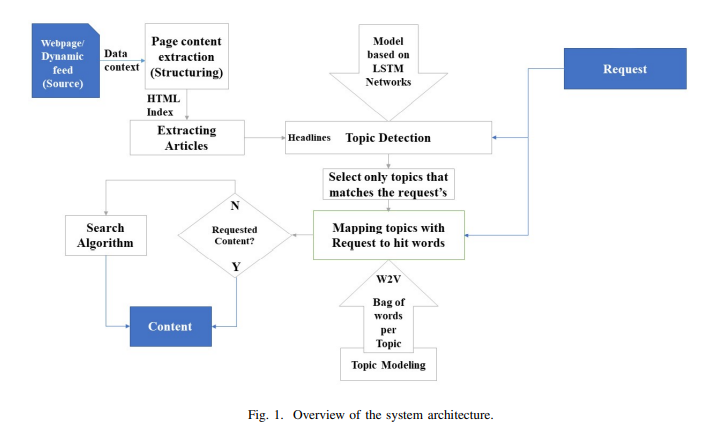
Information extraction and reasoning from massive high-dimensional data at dynamic contexts, is very demanding and yet is very hard to obtain in real-time basis. However, such process capability and efficiency might be affected and limited by the available computational resources and the consequent power consumption. Conventional search mechanisms are often incapable of real-time fetching a predefined content from data source, without concerning the increased number of connected devices that contribute to the same source. In this work, we propose and present a concept for an efficient approach
Optimum Scheduling of the Disinfection Process for COVID-19 in Public Places with a Case Study from Egypt, a Novel Discrete Binary Gaining-Sharing Knowledge-Based Metaheuristic Algorithm
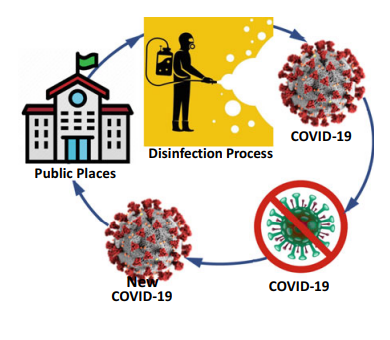
The aim of this paper is to introduce an improved strategy for controlling COVID-19 and other pandemic episodes as an environmental disinfection culture for public places. The scheduling aims at achieving the best utilization of the available working day-time hours, which is calculated as the total consumed disinfection times minus the total loosed transportation times. The proposed problem in network optimization identifies a disinfection group who is likely to select a route to reach a subset of predetermined public places to be regularly disinfected with the most utilization of the
Intelligent Arabic-Based Healthcare Assistant
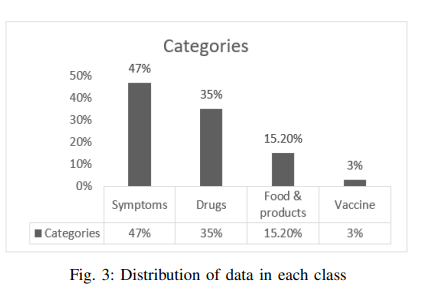
Text classification has been one of the most common natural language processing (NLP) objectives in recent years. Compared to other languages, this mission with Arabic is relatively restricted and in its early stages, and this combination in the medical application area is rare. This paper builds an Arabic health care assistant, specifically a pediatrician that supports Arabic dialects, especially Egyptian accents. The proposed application is a chatbot based on Artificial Intelligence (AI) models after experimenting with Two Bidirectional Encoder Representations from Transformers (BERT) models
Real-Time Fish Detection Approach on Self-Built Dataset Based on YOLOv3
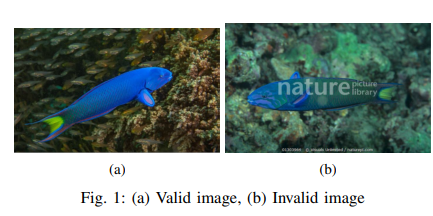
Creating a model to detect freely moving fish underwater in real-time is a challenging process for two main reasons. First, the available datasets suffer from some limitations that severely affect the results of the detection models operating in challenging and blurry environments. These models should be able to capture all of the fish movement given different types of surroundings. Second, choosing the convenient detection model system which matches the desired requirements from having high accuracy with satisfying frames per second (FPS). To overcome the first challenge, a new dataset was
Guava Trees Disease Monitoring Using the Integration of Machine Learning and Predictive Analytics
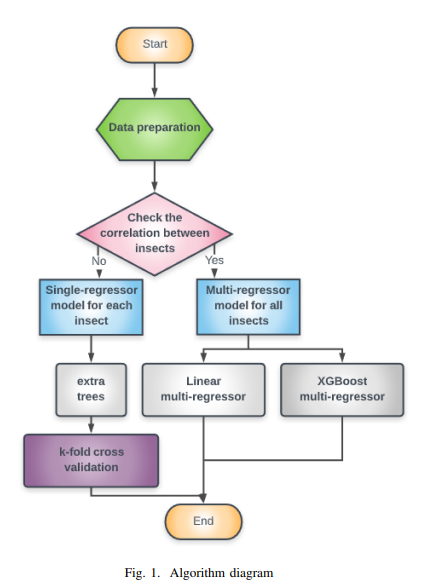
The increase in population, food demand, and the pollution levels of the environment are considered major problems of this era. For these reasons, the traditional ways of farming are no longer suitable for early and accurate detection of biotic stress. Recently, precision agriculture has been extensively used as a potential solution for the aforementioned problems using high resolution optical sensors and data analysis methods that are able to cope with the resolution, size and complexity of the signals from these sensors. In this paper, several methods of machine learning have been utilized