
Filter by
Analysis of a device-free passive tracking system in typical wireless environments
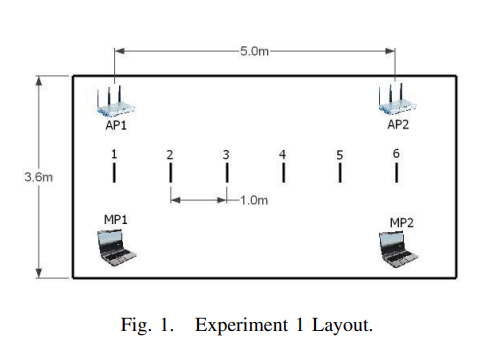
Device-free Passive (DfP) localization is a new concept in location determination where the tracked entity does not carry any device nor participate actively in the localization process. A DfP system operates by processing the received physical signal of a wireless transmitter at one or more monitoring points. The previously introduced DfP system was shown to enable the tracking of a single
Distributed flooding-based storage algorithms for large-scale wireless sensor networks
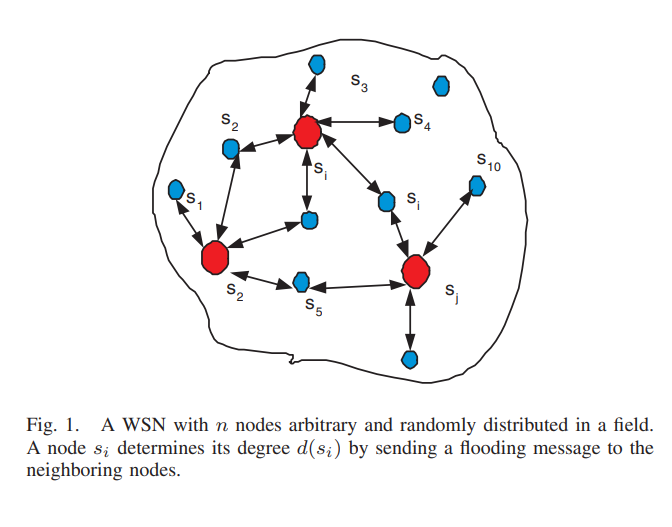
In this paper we propose distributed storage algorithms for large-scale wireless sensor networks. Assume a wireless sensor network with n nodes that have limited power, memory, and bandwidth. Each node is capable of both sensing and storing data. Such sensor nodes might disappear from the network due to failures or battery depletion. Hence it is desired to design efficient schemes to collect data
Towards evolving sensor actor networks
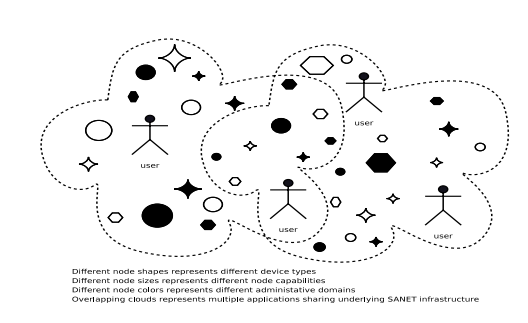
Sensor Actor NETworks (SANET) represent a major component of ubiquitous service environments promising interesting solutions to a wide range of problems. Despite the obvious increase in the research activities proposing architectures and protocols for SANETs, we are still no where near the production of industrial-grade SANET software that can be relied upon for mission critical applications. The
Formal specification and analysis of the PCF protocol in the 802.11 standard using systems of communicating machines
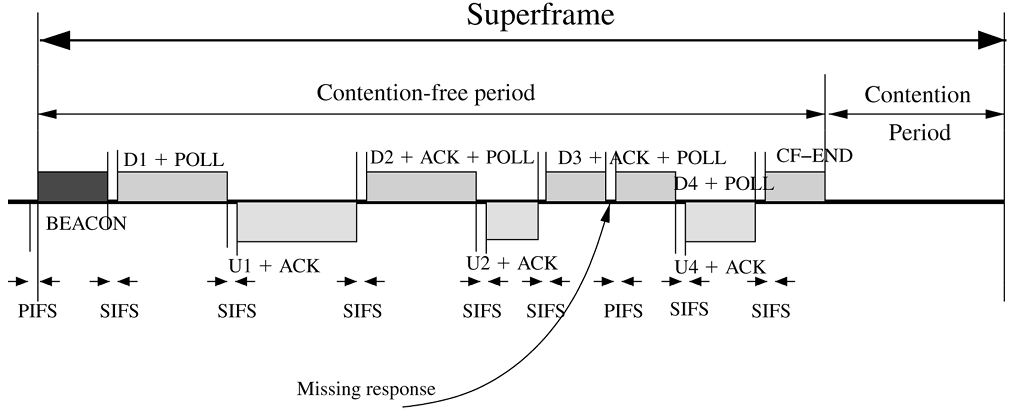
With the widespread usage of the 802.11 protocol, it becomes important to study the protocol operation. In this paper we propose a formal model for the point coordination function (PCF) of the 802.11 MAC layer using systems of communicating machines. Our goal is to analyse the protocol for safety and liveness properties. These properties cannot be verified directly from the protocol description
On the secrecy rate region for the interference channel
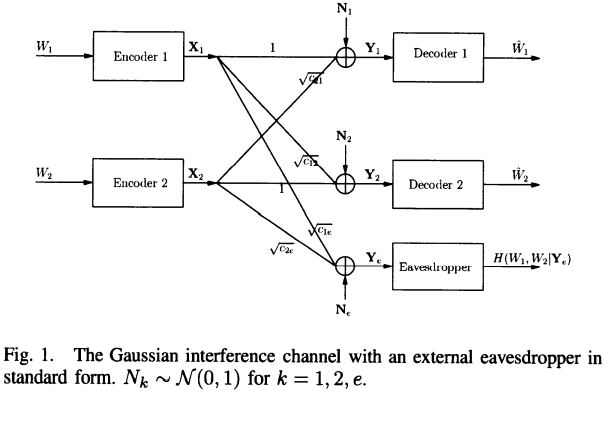
This paper studies interference channels with security constraints. The existence of an external eavesdropper in a two-user interference channel is assumed, where the network users would like to secure their messages from the external eavesdropper. The cooperative binning and channel prefixing scheme is proposed for this system model which allows users to cooperatively add randomness to the
The wiretap channel with feedback: Encryption over the channel
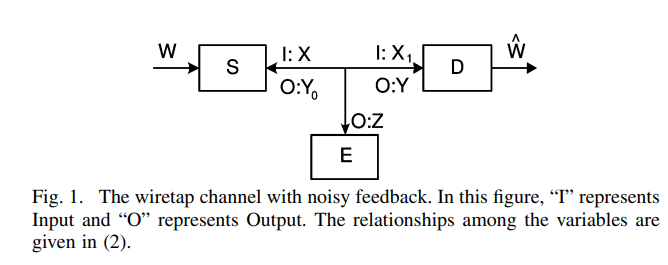
In this work, the critical role of noisy feedback in enhancing the secrecy capacity of the wiretap channel is established. Unlike previous works, where a noiseless public discussion channel is used for feedback, the feed-forward and feedback signals share the same noisy channel in the present model. Quite interestingly, this noisy feedback model is shown to be more advantageous in the current
On the secrecy capacity of fading channels
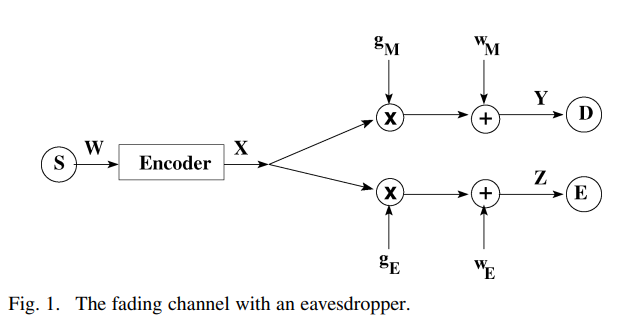
We consider the secure transmission of information over an ergodic fading channel in the presence of an eavesdropper. Our eavesdropper can be viewed as the wireless counterpart of Wyner's wiretapper. The secrecy capacity of such a system is characterized under the assumption of asymptotically long coherence intervals. We first consider the full channel state information (CSI) case, where the
The relay-eavesdropper channel: Cooperation for secrecy
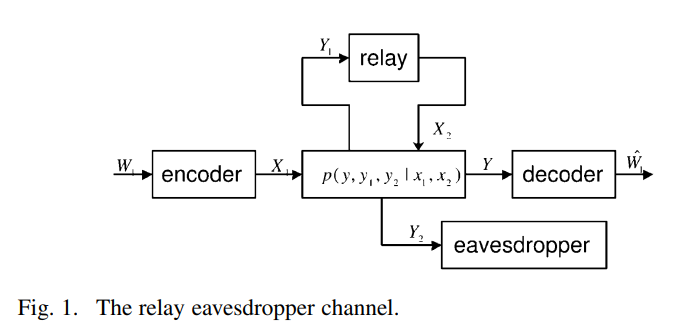
This paper establishes the utility of user cooperation in facilitating secure wireless communications. In particular, the four-terminal relay-eavesdropper channel is introduced and an outer-bound on the optimal rate-equivocation region is derived. Several cooperation strategies are then devised and the corresponding achievable rate-equivocation region are characterized. Of particular interest is
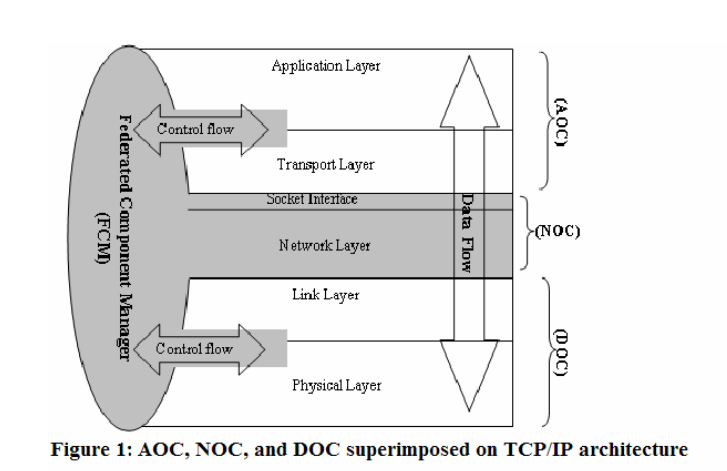
Towards a federated network architecture
The layered architecture that guided the design of the Internet is deemed inadequate as a reference model for engineering protocols for NGN. Layered protocol suites impose a strict sequential order on protocol execution conflicting with the efficient engineering of end systems, as well as failing to express vertical functional integration, the separation of control and data planes, and the
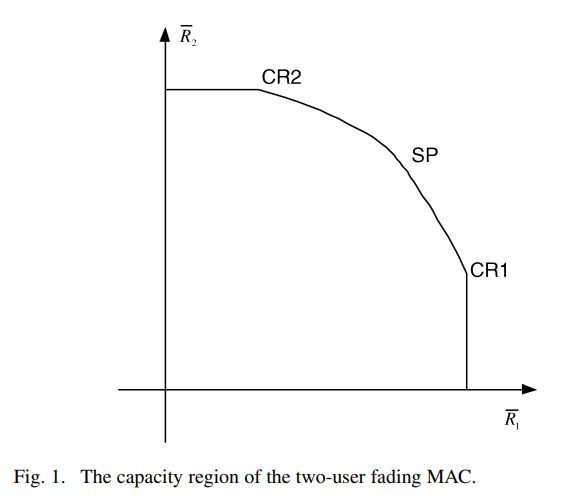
The water-filling game in fading multiple-access channels
A game-theoretic framework is developed to design and analyze the resource allocation algorithms in fading multiple-access channels (MACs), where the users are assumed to be selfish, rational, and limited by average power constraints. The maximum sum-rate point on the boundary of the MAC capacity region is shown to be the unique Nash equilibrium of the corresponding water-filling game. This result