
Filter by
Practical provably secure communication for half-duplex radios
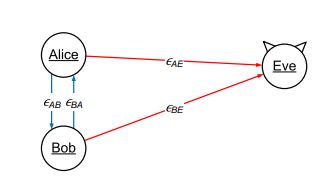
In this paper, we present a practical and provably secure two-way wireless communication scheme in the presence of a passive eavesdropper. The scheme implements a randomized scheduling and power allocation mechanism, where each legitimate node transmits in random time slots and with random transmit power. Such randomization results in ambiguity at the eavesdropper with regard to the origin of each
Cooperative sensing with sequential ordered transmissions to secondary fusion center
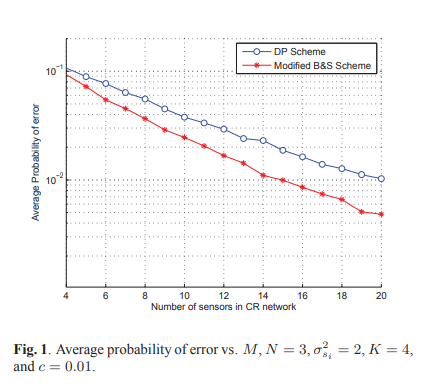
Successful spectrum sharing in a cognitive radio network depends on the correct and quick detection of primary activity. Cooperative spectrum sensing is therefore suggested to enhance the reliability of such detection. However, it renders another significant problem of increased detection delay and traffic burden. Moreover, efficient schemes for multi-sensor data fusion should be designed. In this
New achievable secrecy rate regions for the two way wiretap channel
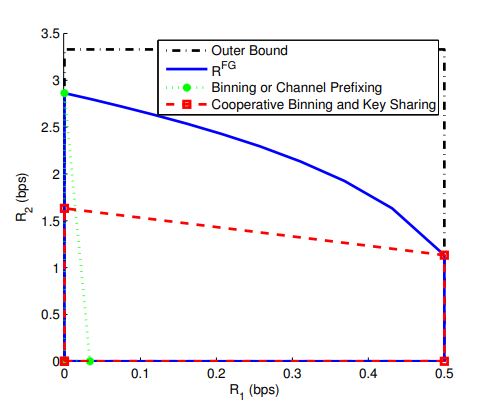
This work develops new achievable rate regions for the two way wiretap channel. In our setup, Alice and Bob wish to exchange messages securely in the presence of a passive eavesdropper Eve. In the full-duplex scenario, our achievability argument relies on allowing the two users to jointly optimize their channel prefixing distributions, such that the new channel conditions are favorable compared to
ARQ security in Wi-Fi and RFID networks
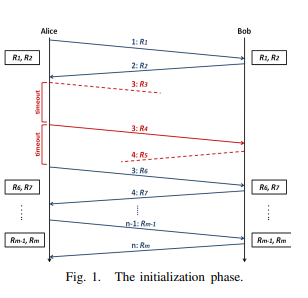
In this paper, we present two practical ARQ-Based security schemes for Wi-Fi and RFID networks. Our proposed schemes enhance the confidentiality and authenticity functions of these networks, respectively. Both schemes build on the same idea; by exploiting the statistical independence between the multipath fading experienced by the legitimate nodes and potential adversaries, secret keys are
ARQ secrecy over correlated fading channels
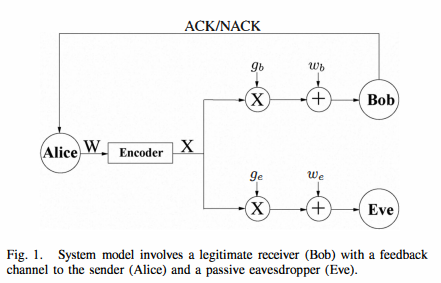
In this paper, we develop novel Automatic Repeat reQuest (ARQ) key sharing protocols for correlated fading channels. In particular, a novel role of "dumb antennas" in overcoming the negative impact of spatial correlation, on the achievable secrecy rates , is unveiled. We further develop an adaptive rate allocation policy which achieves higher secrecy rates by exploiting the channel temporal

Symbol based log-MAP in concatenated LDPC-convolutional codes
In this paper we study the use of a high rate Low Density Parity Check (LDPC) codes in concatenated coding structures. Specifically, we use the LDPC code as an outer code, with a convolutional code as an inner code. We decode the convolutional code using a symbol based Log-MAP (Maximum a posteriori probability) decoder, and feed the soft outputs of this decoder into a non-binary Galois Field LDPC
A deterministic large-scale device-free passive localization system for wireless environments
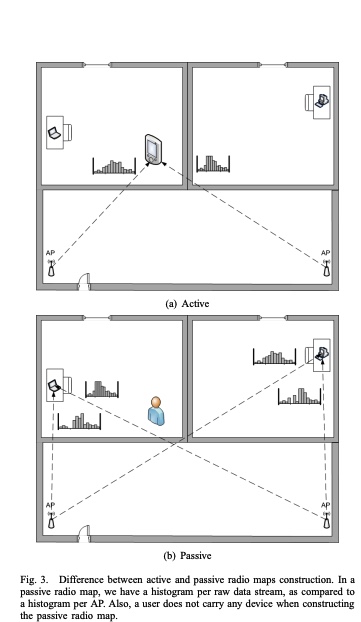
The widespread usage of wireless local area networks and mobile devices has fostered the interest in localization systems for wireless environments. The majority of research in the context of wirelessbased localization systems has focused on device-based active localization, in which a device is attached to tracked entities. Recently, device-free passive localization (DfP) has been proposed where
Power control for constrained throughput maximization in spectrum shared networks
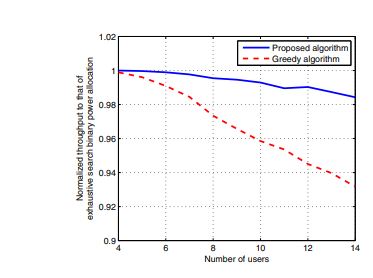
We investigate power allocation for users in a shared spectrum network. In such a network, the primary (licensed) users communicate under a minimum guaranteed quality of service (QoS) requirements, whereas the secondary users opportunistically access the primary band. Our objective is to find a power control scheme that determines the transmit power for both primary and secondary users so that the
HyberLoc: Providing physical layer location privacy in hybrid sensor networks
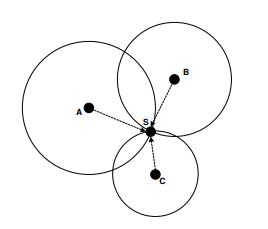
In many hybrid wireless sensor networks' applications, sensor nodes are deployed in hostile environments where trusted and un-trusted nodes co-exist. In anchor-based hybrid networks, it becomes important to allow trusted nodes to gain full access to the location information transmitted in beacon frames while, at the same time, prevent un-trusted nodes from using this information. The main
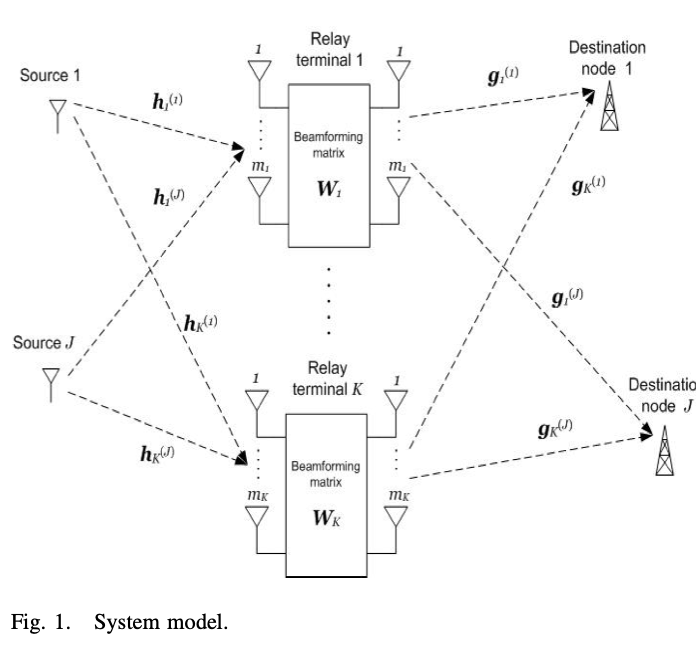
Adaptive linearly constrained minimum variance beamforming for multiuser cooperative relaying using the kalman filter
In this paper, we consider a wireless communication scenario with multiple source-destination pairs communicating through several cooperative amplify-and-forward relay terminals. The relays are equipped with multiple antennas that receive the source signals and transmit them to the destination nodes. We develop two iterative relay beamforming algorithms that can be applied in real-time. In both