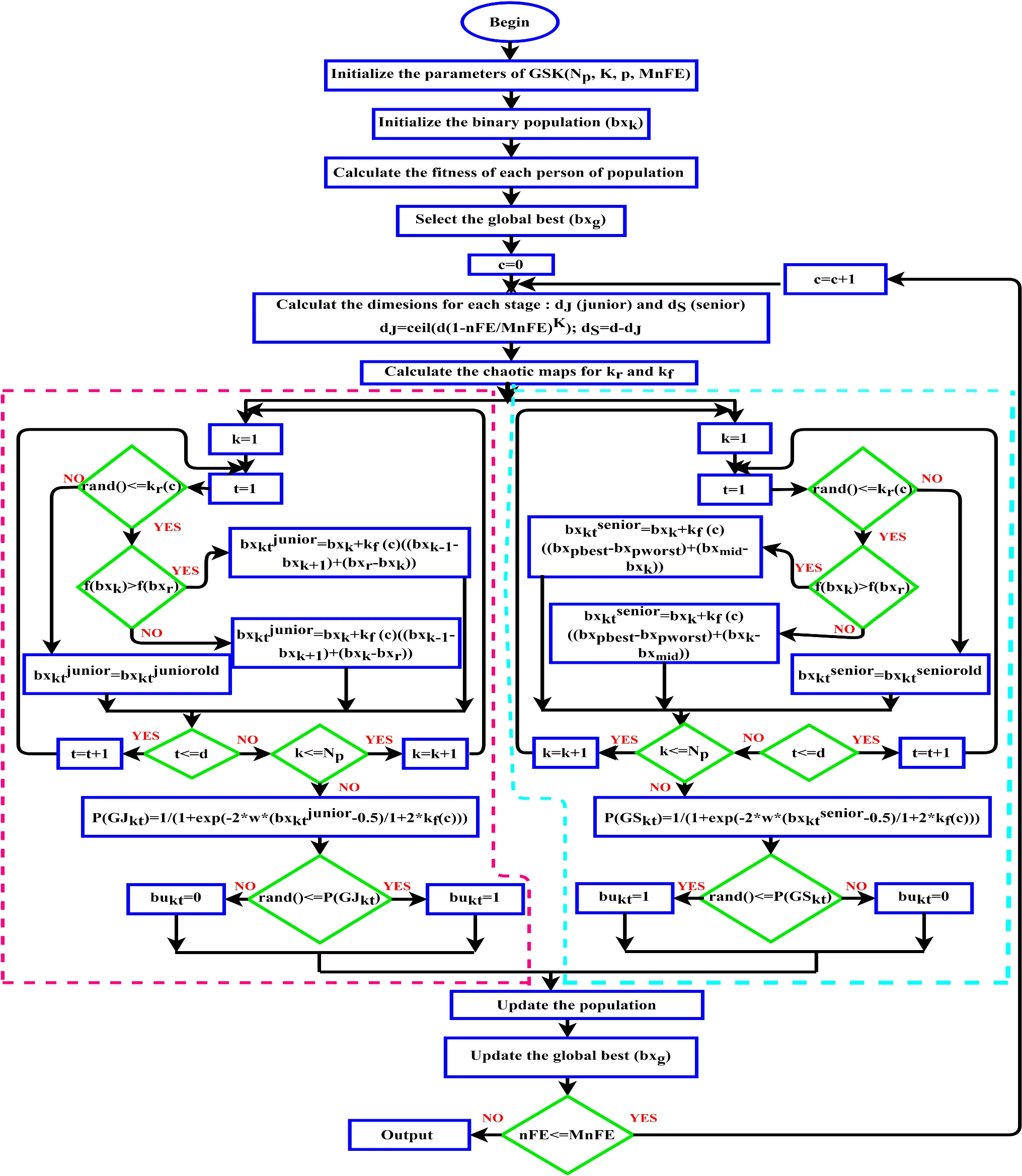
Chaotic gaining sharing knowledge-based optimization algorithm: an improved metaheuristic algorithm for feature selection
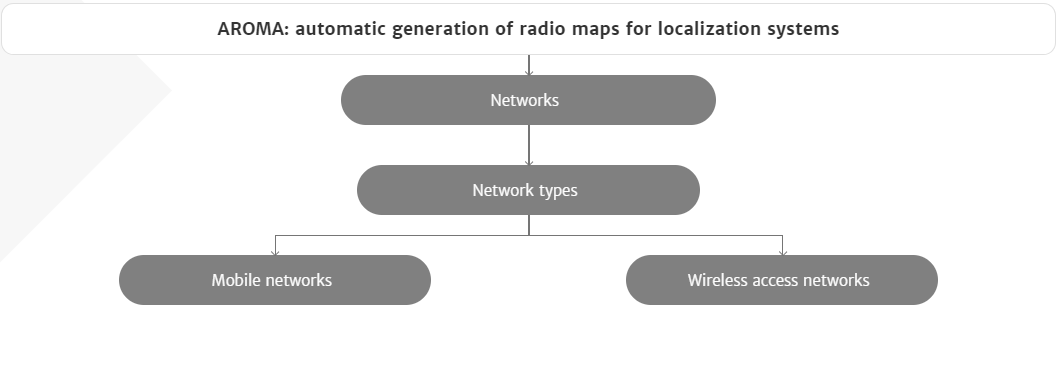
AROMA: Automatic generation of radio maps for localization systems
Current methods for building radio maps for wireless localization systems require a tedious, manual and error-prone calibration of the area of interest. Each time the layout of the environment is changed or different hardware is used, the whole process of location fingerprinting and constructing the radio map has to be repeated. The process gets more complicated in the case of localizing multiple entities in a device-free scenario, since the radio map needs to take all possible combinations of the location of the entities into account. In this demo, we present a novel system (AROMA) that is
Transmission power adaptation for cognitive radios
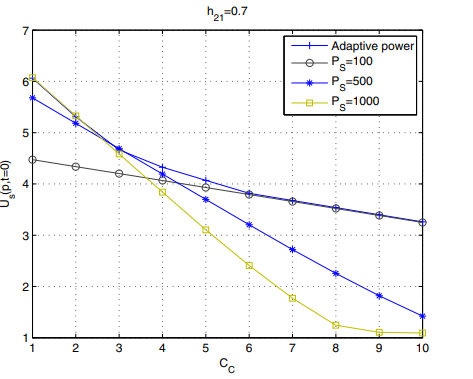
In cognitive radio (CR) networks, determining the optimal transmission power for the secondary users (SU) is crucial to achieving the goal of maximizing the secondary throughput while protecting the primary users (PU) from service disruption and interference. In this paper, we propose an adaptive transmission power scheme for cognitive terminals opportunistically accessing a primary channel. The PU operates over the channel in an unslotted manner switching activity at random times. The secondary transmitter (STx) adapts its transmission power according to its belief regarding the PU's state of
Hierarchical proactive caching for vehicular ad hoc networks
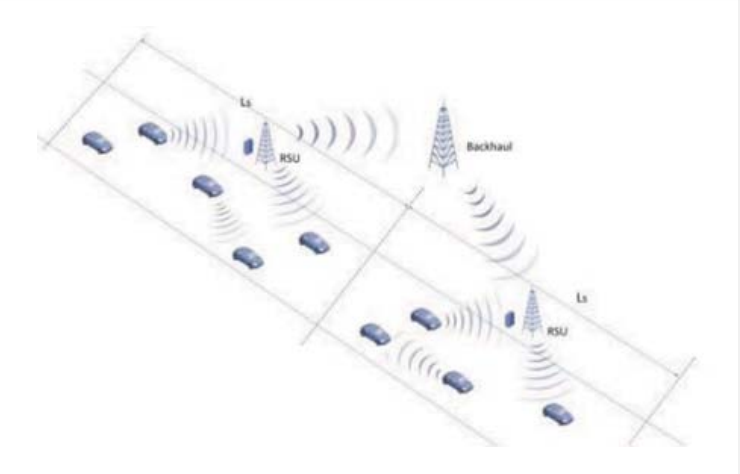
Recently, emerging vehicular applications are increasing the demand of vehicles which form significant burdens on network backhaul and represents a cause to the quality of experience (QoE) decay of the vehicular users. Proactive caching is a promising technique to mitigate the load on core networks by caching some of the expected data items. This work proposes a hierarchical proactive caching scheme which jointly considers caching in vehicles and roadside units (RSUs). Minimization of the vehicle communication latency is the main objective of our study. The optimization problem is formulated
Geographic Routing with Cooperation for Reliable Paths in Device-to-Device Networks
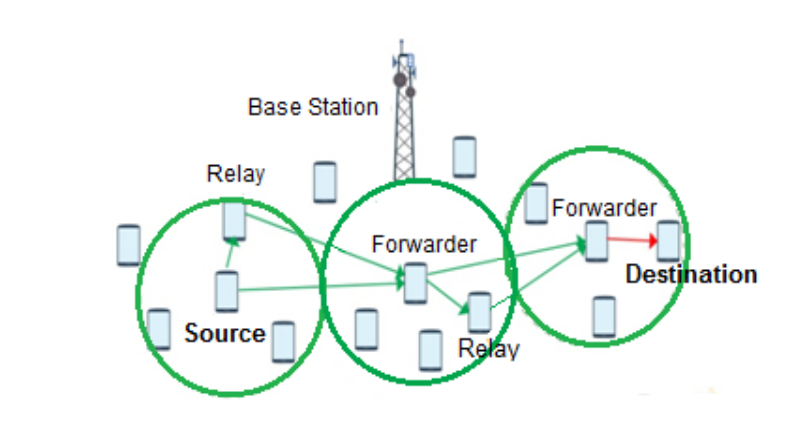
In this paper, we introduce a novel geographic routing with cooperation scheme for 5G Device-to-Device ad hoc networks. The prime focus of our scheme (coined Cooperative Routing for Reliable Paths (CRRP)) is to enhance the routing performance in cooperative communication networks in terms of the path length and reliability. In particular, it introduces novel algorithms for cooperative relay and forwarder selections, which strike the best balance between path length and achieved symbol error rate, compared to prior work in the literature. Moreover, it exhibits the flexibility of deciding
Optimal random access and random spectrum sensing for an energy harvesting cognitive radio
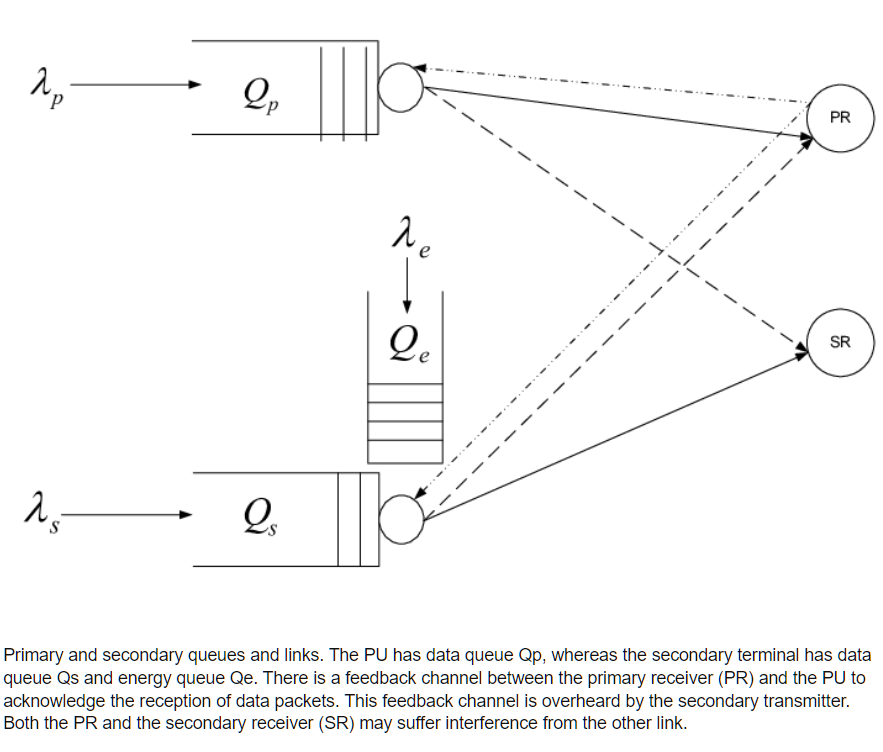
We consider a secondary user with energy harvesting capability. We design access schemes for the secondary user which incorporate random spectrum sensing and random access, and which make use of the primary automatic repeat request (ARQ) feedback. The sensing and access probabilities are obtained such that the secondary throughput is maximized under the constraints that both the primary and secondary queues are stable and that the primary queueing delay is kept lower than a specified value needed to guarantee a certain quality of service (QoS) for the primary user. We consider spectrum sensing

Optimal random access for a cognitive radio terminal with energy harvesting capability

The deterministic multicast capacity of 4-node relay networks
In this paper, we completely characterize the deterministic capacity region of a four-node relay network with no direct links between the nodes, where each node communicates with the three other nodes via a relay. Towards this end, we develop an upper bound on the deterministic capacity region, based on the notion of a one-sided genie. To establish achievability, we use the detour schemes that achieve the upper bound by routing specific bits via indirect paths instead of sending them directly. © 2013 IEEE.
Towards evolving sensor actor networks
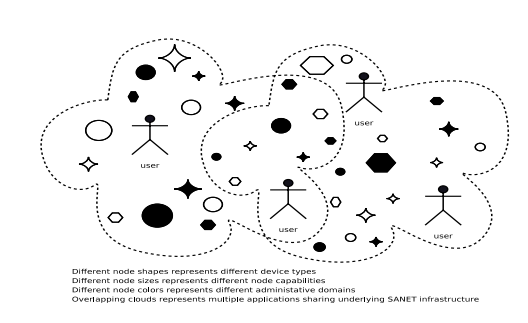
Sensor Actor NETworks (SANET) represent a major component of ubiquitous service environments promising interesting solutions to a wide range of problems. Despite the obvious increase in the research activities proposing architectures and protocols for SANETs, we are still no where near the production of industrial-grade SANET software that can be relied upon for mission critical applications. The cost of programming, deploying and maintaining SANET environments is still highly prohibitive due to the lack of industrial tools capable of realizing adaptive SANET software in a cost effective way