
Design, Simulation & Optimization on Electrical and Optical Parameters of Alq3 QW-OLED
Although the light-emitting diode (LED) was discovered in the 1900s, it is now widely used in lighting, screens, and a variety of other indoor and outdoor applications. (Organic Light Emitting Diode) OLED is one of the advancing branches of LED technology. In the structure of Alq3 OLEDs, highlight-efficiency optical materials such as TPD (hole transport layer) and Alq3 (electron transport layer) have been used. Organic light emitting layers are between two electrical contacts. The anode was made of indium tin oxide (ITO), and the cathode was made of aluminiumlithium (Al/Li). This article

SSHC with One Capacitor for Piezoelectric Energy Harvesting
Piezoelectric vibration energy harvesters have attracted a lot of attention as a way to power self-sustaining electronic systems. Furthermore, as part of the growing Internet of Things (loT) paradigm, the ongoing push for downsizing and higher degrees of integration continues to constitute major drivers for autonomous sensor systems. Two of the most effective interface circuits for piezoelectric energy harvesters are synchronised switch harvesting (SSH) on inductor and synchronous electrical charge extraction; nevertheless, inductors are essential components in both interfaces. This study

Cross-Junction Based Metasurface for Wideband 90° Polarization Rotation
In this work, an ultrathin subwavelength metasurface based on a cross-junction-inspired unit cell that exhibits efficient wideband polarization rotation is presented. This structure manipulates the polarization of the incident electromagnetic radiation in the transmission band. The proposed metasurface converts the incident linearly polarized waves into the orthogonal polarization over a fractional bandwidth of 9.6% with a maximum insertion loss of 0.65 dB. The detailed analysis of the structure's inherent resonances and their origins are also presented with special emphasis on the intrinsic

Relay Selection in NOMA-Based Cooperative Wireless Backhaul Networks
The joint application of wireless backhaul networks and non-orthogonal multiple access (NOMA) hold the potential to fulfill the increasing demands of fifth-generation (5G) communication networks and beyond. It is usual in wireless backhaul networks to take assistance from small cell base stations acting as intermediate relays to reach the remote destination. This cooperative communication is an acknowledged technique to combat multi-path fading, improve energy efficiency, and enhance the reliability and capacity of wireless networks. This article studies the application of relay selection (RS)
Asymmetric degrees of freedom of the full-duplex MIMO 3-way channel
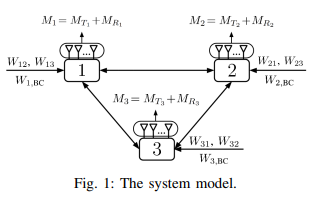
In this paper, we characterize the asymmetric total degrees of freedom (DoF) of a multiple-input multiple-output (MIMO) 3-way channel. Each node has a separate-antenna full-duplex MIMO transceiver with a different number of antennas, where each antenna can be configured for either signal transmission or reception. Each node has two unicast messages to be delivered to the two other nodes. We first derive upper bounds on the total DoF of the system. Cut-set bounds in conjunction with genie-aided bounds are derived to characterize the achievable total DoF. Afterwards, we analytically derive the
A deterministic large-scale device-free passive localization system for wireless environments
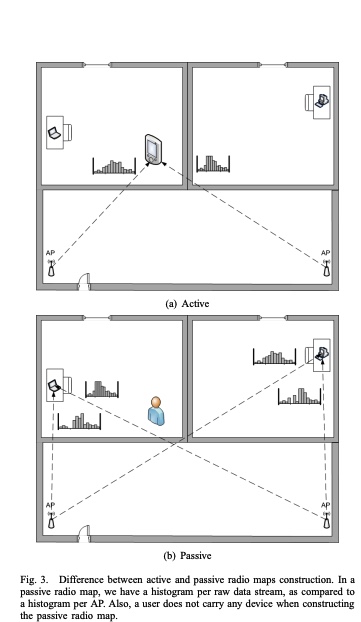
The widespread usage of wireless local area networks and mobile devices has fostered the interest in localization systems for wireless environments. The majority of research in the context of wirelessbased localization systems has focused on device-based active localization, in which a device is attached to tracked entities. Recently, device-free passive localization (DfP) has been proposed where the tracked entity is neither required to carry devices nor participate actively in the localization process. DfP systems are based on the fact that RF signals are affected by the presence of people