
Filter by

Kalman filter-based tracking of a device-free passive entity in wireless environments
Device-free passive (DfP) localization has been recently proposed to allow localizing a stationary entity that neither carries a device nor participates actively in the localization process. In this paper, we present a Kalman filter-based system that enables tracking a continuously moving entity in a typical wireless environment rich in multipath. The concept behind DfP tracking is that the
Censoring for improved performance of distributed detection in wireless sensor networks
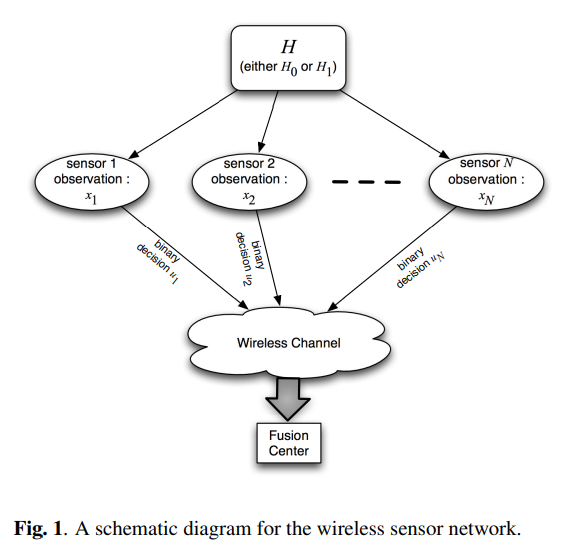
In this paper, we consider the problem of binary hypothesis testing for distributed detection in wireless sensor networks in which a transmission censoring scheme is employed. The sensor nodes transmit binary decisions to the fusion center (FC) for final decision making. Sensor nodes with unreliable observation samples censor transmission to FC. By having two thresholds at each sensor node, a
A hidden Markov model for localization using low-end GSM cell phones
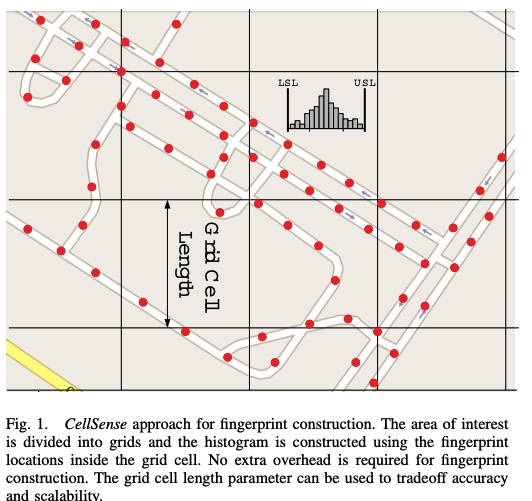
Research in location determination for GSM phones has gained interest recently as it enables a wide set of location based services. RSSI-based techniques have been the preferred method for GSM localization on the handset as RSSI information is available in all cell phones. Although the GSM standard allows for a cell phone to receive signal strength information from up to seven cell towers, many of
Optimization of channel sensing time and order for cognitive radios
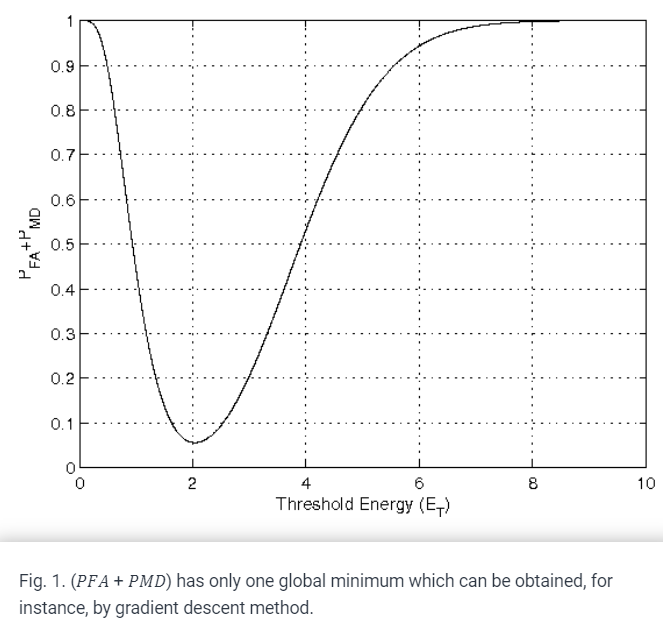
In this paper we consider a single cognitive radio seeking a transmission opportunity by sequentially sensing a number of statistically independent primary channels. We study the joint optimization of the time spent to sense a channel, the decision threshold to determine whether the channel is free or busy, together with the order with which the channels are sensed. The sensing time and decision
A source authentication scheme using network coding
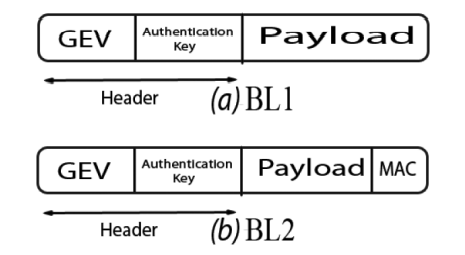
In this paper, we explore the security merits of network coding and potential trade-offs with the widely accepted throughput benefits, especially in multicast scenarios. In particular, we propose a novel Source Authentication using Network Coding (SANC) scheme. Towards this objective, we propose a general framework for embedding the authentication information within the network coding Global
On the utility of primary side information in cognitive sensing
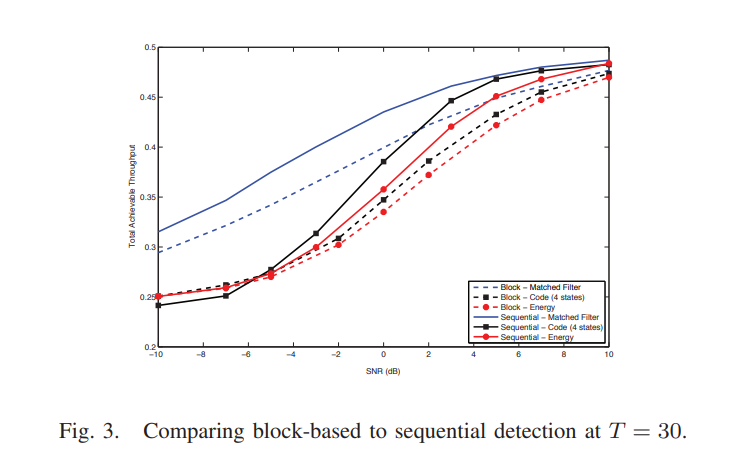
In this paper, we study the impact of the knowledge of primary side information on the efficiency of spectrum sensing for cognitive radio networks. In particular, assuming that the secondary transmitter knows the modulation and/or coding scheme used in the primary transmissions, we evaluate the efficiency of spectrum sensing in terms of maximizing the overall achievable throughput of the system
Impact of the human motion on the variance of the received signal strength of wireless links
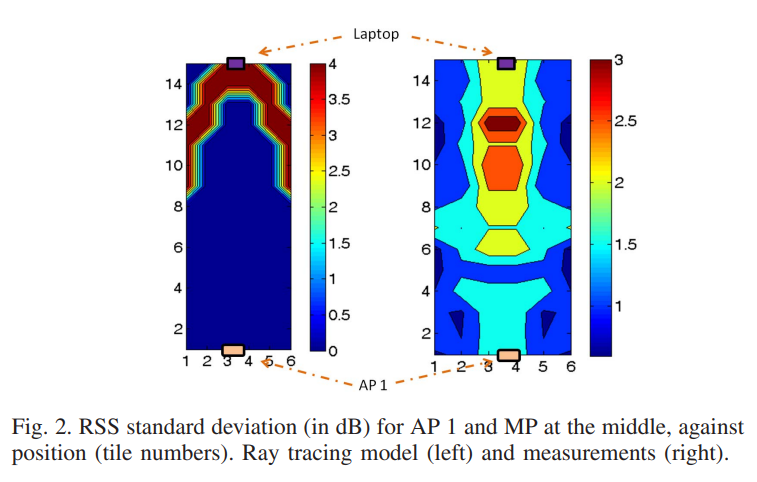
Human motion has strong impact on the received signal strength (RSS) of indoor wireless links that can be exploited for variance-based device-free positioning. In this paper, we investigate the effect of human motion on the variance of the RSS of wireless local area networks (WLAN) operating at 2.4 GHz. Using measurements, the RSS variance for human in-place motion is determined as a function of
SANC: Source authentication using network coding
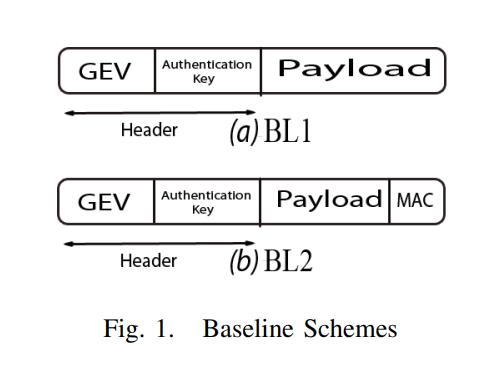
In this paper, we explore the security merits of network coding and potential trade-offs with the widely accepted throughput benefits, especially in multicast scenarios. In particular, we propose a novel Source Authentication using Network Coding (SANC) scheme that can either complement state-of-the-art application-layer authentication schemes proposed in the literature or be used as a stand-alone
Constrained interference alignment and the spatial degrees of freedom of mimo cognitive networks
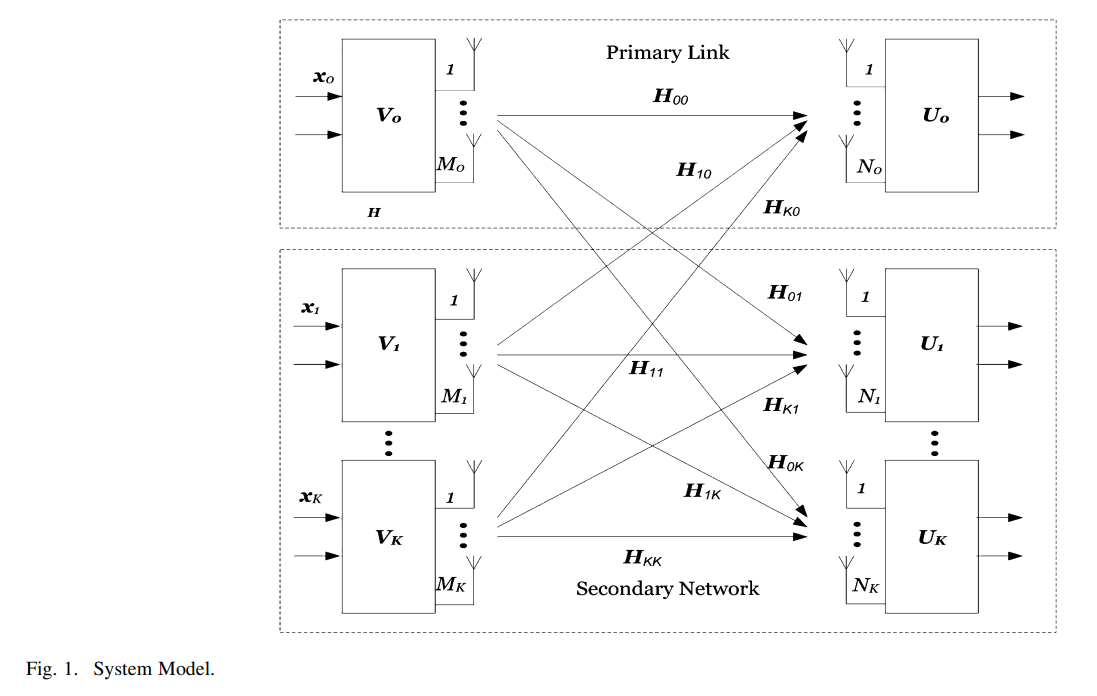
An interference alignment (IA) scheme is presented that allows multiple opportunistic transmitters (secondary users) to use the same frequency band of a pre-existing primary link without generating any interference. The primary and secondary transmit-receive pairs are equipped with multiple antennas. Under power constraints on the primary transmitter, the rate of the primary user is maximized by
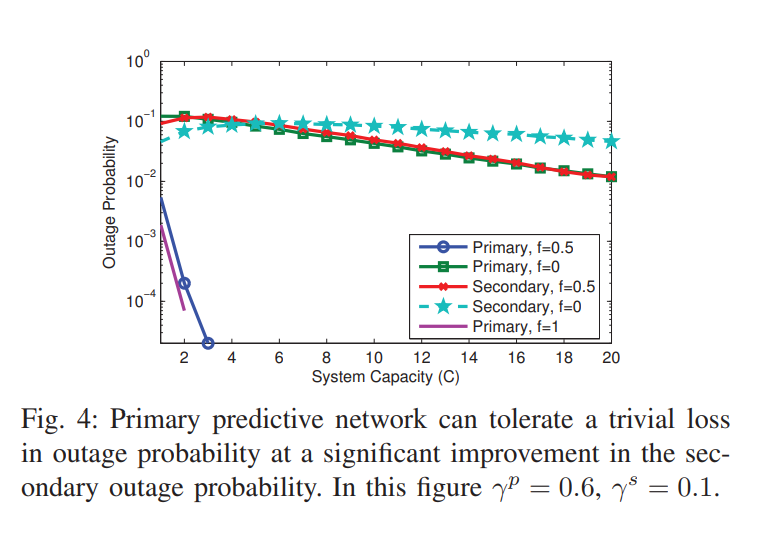
Proactive resource allocation in cognitive networks
Recently we have introduced the notion of proactive resource allocation and predictive wireless networks, where intelligent wireless networks are capable of tracking and exploiting the repetition patterns in human behavior while accessing the network resources. This predictability advantage grants the network more flexibility to schedule users' requests over a longer time horizon, and thereby